Sub-Earth

Sub-Earth
Planet smaller than Earth.
No account needed. By playing, you confirm you're 13 or older and agree to the Terms of use.
No owners yet
Category: Empty
- 0 owners
- 0 copies
- 0 pulls
- Wishlisted
- 0
- In 0 albums
- On 0 showcases
- Market listings
- 0
Not sold on the market yet.
Readers' pathsAug 2026 – Oct 2026
Readers go next to
Share of the 387 clicks on its links

WD 1145+017 b
Exoplanetary object orbiting around WD 1145+017.
24%

Kepler-20
Star in the constellation Lyra.
23%

Kepler-42
Red dwarf star in the constellation Cygnus.
19%

Proxima Centauri d
Sub-Earth orbiting Proxima Centauri.
12%
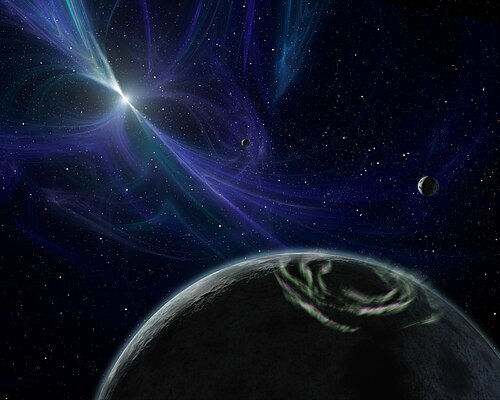
PSR B1257+12
Millisecond pulsar in the constellation Virgo.
5.4%

Super-Earth
Type of exoplanet larger than Earth.
5.4%

Mars
Fourth planet from the Sun.
5.4%

Mercury (planet)
First planet from the Sun.
2.6%

Proxima Centauri
Nearest star to the Solar System.
2.6%
Readers come from
Share of the 1,199 readers arriving from another article

Alpha Centauri
Star system in the Centaurus constellation.
26%
Proxima Centauri
Nearest star to the Solar System.
24%
Super-Earth
Type of exoplanet larger than Earth.
18%
Proxima Centauri d
Sub-Earth orbiting Proxima Centauri.
7.7%

Barnard's Star b
Sub-Earth exoplanet orbiting Barnard's Star.
4.7%

Kepler-37b
Sub-Earth orbiting Kepler-37, currently the smallest known exoplanet.
2.8%